One of the most common questions among people who use cannabis, even occasionally, is how long THC stays in saliva and at what point it's no longer detectable.
The answer isn't a single number — it's a range that depends on several individual factors and on the type of test used. In this article, we go over what the available evidence says and how this type of testing actually works.
What a saliva test actually detects
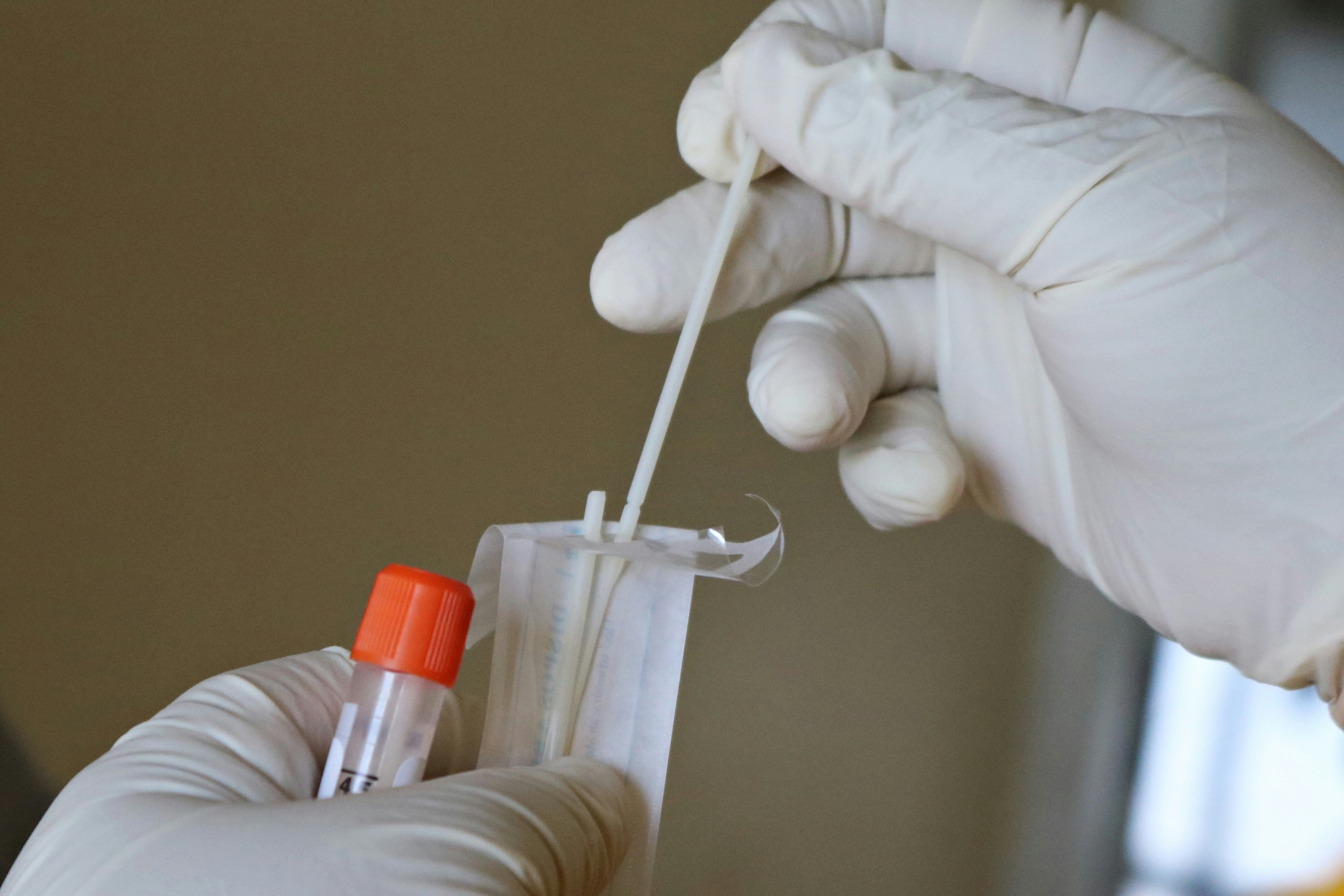
Saliva tests don't measure whether a person is "currently impaired" by cannabis — they measure the presence of THC (tetrahydrocannabinol) or its metabolite in an oral fluid sample.
It's a qualitative test: it comes back positive or negative depending on whether the concentration exceeds a set threshold, usually between 1 and 50 ng/ml depending on the device. The devices most commonly used at checkpoints give a screening result in about 5–8 minutes; if positive, it's typically confirmed afterward with a more precise laboratory analysis.
Unlike blood tests, which more accurately reflect actual impairment at the time of use, saliva can keep showing traces of THC long after the psychoactive effects have worn off. That's key to understanding why "testing positive" doesn't necessarily mean "currently under the influence."
How long THC stays in saliva depending on the type of user
The figures vary quite a bit between studies and sources, but the overall pattern is consistent:
- Occasional users: THC is usually detectable between 6 and 24 hours after use, although in some individual cases it has been documented for up to 48 hours.
- Regular users: due to THC building up in the body, detection can extend from 1 to 4 days, and in very heavy users, cases of up to a week have been recorded.
This difference exists because THC is fat-soluble: it's stored in body fat and released gradually, which in frequent users creates a kind of "reserve" that extends the detection window.
THC in saliva vs. other detection methods
Each type of biological sample has a different detection window, which is why the same instance of use can produce different results depending on which test is used:
| Sample type | Approximate detection window | What it indicates |
|---|---|---|
| Saliva | 6 hours – 4 days (up to 1 week in very frequent users) | Recent use |
| Blood | A few hours – 2 days | Active presence, closer to real impairment |
| Urine | Several days – several weeks (regular users) | Metabolites, not recent use |
| Hair | Up to 90 days | Long-term use pattern |
This table explains why saliva is the method chosen for traffic checkpoints: by focusing on recent use, it is, in theory, the indicator closest to possible impairment at the moment of driving. That said, this relationship isn't always as direct as it seems, as we'll see below.
Factors that affect how long it lasts
Several elements determine how long THC remains detectable in a given person's saliva:
- Frequency of use: the most decisive factor, as seen above.
- Amount consumed: the more THC consumed, the longer it takes the body to fully eliminate it.
- Individual metabolism: age, body weight, physical activity, and liver function all affect elimination speed.
- Method of use: smoking tends to produce a somewhat shorter detection window than edible products, which are processed differently — and more slowly — by the body.
- Test sensitivity: not all devices use the same cutoff threshold, so the same THC level can test positive on one device and negative on another.
The legal context in Spain
In Spain, the Dirección General de Tráfico (DGT) — Spain's Traffic Authority — uses saliva tests at roadside checks under a zero-tolerance principle: unlike alcohol, there is no threshold considered "safe" for THC behind the wheel. Any detectable presence can constitute an administrative offense, regulated under Royal Legislative Decree 6/2015 (Article 14.2), with consequences that include a fine and the loss of points on your driving license.
This raises a legal debate that's increasingly present in the courts: saliva tests detect the presence of THC, not necessarily actual impairment at the time of the check. Some recent court rulings have challenged the automatic application of penalties when there's no other evidence of driving under the influence. This is an evolving area, so it's worth getting properly informed if it affects your personal situation — ideally with specific legal advice.
A matter of variability, not certainty
If one thing is clear from reviewing the available literature, it's that there is no single, universal figure for how long THC stays in saliva: it depends on the person, their pattern of use, and the test used.
That's why any figure given should be understood as a general guide, not a guarantee that applies to every case.